Media Summary: ... is the warm up for the true significance This video shows how to conduct one-tailed and 2-tailed significance We shouldn't accept the conclusions of let's

Ap Statistics Testing A Claim About A Proportion - Detailed Analysis & Overview

... is the warm up for the true significance This video shows how to conduct one-tailed and 2-tailed significance We shouldn't accept the conclusions of let's Courses on Khan Academy are always 100% free. Start practicing—and saving your progress—now: ... This video covers how to run a significance This video covers the basis of what a hypothesis

Photo Gallery

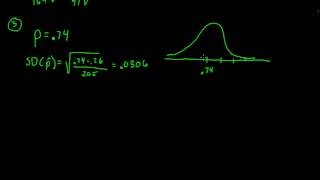
AP Statistics: Testing a Claim about a Proportion (full example)
AP Statistics: Testing a Claim about a Proportion
stats 8.3 - testing a claim about a proportion #1
Test Statistic For Means and Population Proportions
Hypothesis Test for Proportion | Examples | P-value | Z table
How To Test A Claim About A Proportion
Statistical Significance, the Null Hypothesis and P-Values Defined & Explained in One Minute
Constructing hypotheses for a significance test about a proportion | AP Statistics | Khan Academy
Statistics - Testing Claims about Proportions
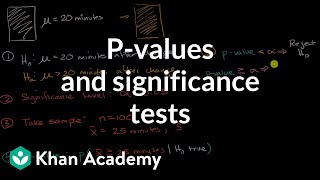
P-values and significance tests | AP Statistics | Khan Academy
Hypothesis Testing - Solving Problems With Proportions
AP Statistics: Testing a Claim about a Mean
Sponsored
Sponsored
View Detailed Profile
AP Statistics: Testing a Claim about a Proportion (full example)

AP Statistics: Testing a Claim about a Proportion (full example)

This video goes over all the steps to

AP Statistics: Testing a Claim about a Proportion

AP Statistics: Testing a Claim about a Proportion

This video covers how to

Sponsored
stats 8.3 - testing a claim about a proportion #1

stats 8.3 - testing a claim about a proportion #1

... is the warm up for the true significance

Test Statistic For Means and Population Proportions

Test Statistic For Means and Population Proportions

This

Hypothesis Test for Proportion | Examples | P-value | Z table

Hypothesis Test for Proportion | Examples | P-value | Z table

This video shows how to conduct one-tailed and 2-tailed significance

Sponsored
How To Test A Claim About A Proportion

How To Test A Claim About A Proportion

Learn how to

Statistical Significance, the Null Hypothesis and P-Values Defined & Explained in One Minute

Statistical Significance, the Null Hypothesis and P-Values Defined & Explained in One Minute

We shouldn't accept the conclusions of let's

Constructing hypotheses for a significance test about a proportion | AP Statistics | Khan Academy

Constructing hypotheses for a significance test about a proportion | AP Statistics | Khan Academy

Courses on Khan Academy are always 100% free. Start practicing—and saving your progress—now: ...

Statistics - Testing Claims about Proportions

Statistics - Testing Claims about Proportions

Hypothesis

P-values and significance tests | AP Statistics | Khan Academy

P-values and significance tests | AP Statistics | Khan Academy

Courses on Khan Academy are always 100% free. Start practicing—and saving your progress—now: ...

Hypothesis Testing - Solving Problems With Proportions

Hypothesis Testing - Solving Problems With Proportions

This

AP Statistics: Testing a Claim about a Mean

AP Statistics: Testing a Claim about a Mean

This video covers how to run a significance

Testing a Claim About a Proportion

Testing a Claim About a Proportion

Hypothesis

AP Statistics: Topic 6.3 Justifying a Claim Based on a Confidence Interval for a Proportion

AP Statistics: Topic 6.3 Justifying a Claim Based on a Confidence Interval for a Proportion

This video covers Topic 6.3 for

AP Statistics: Hypothesis Test for 1 Proportion Sample (2014)

AP Statistics: Hypothesis Test for 1 Proportion Sample (2014)

This video covers the basis of what a hypothesis

Significance test for a proportion free response example | AP Statistics | Khan Academy

Significance test for a proportion free response example | AP Statistics | Khan Academy

Courses on Khan Academy are always 100% free. Start practicing—and saving your progress—now: ...